Narrowband UVB for Psoriasis: What to Expect at Phototherapy Visits
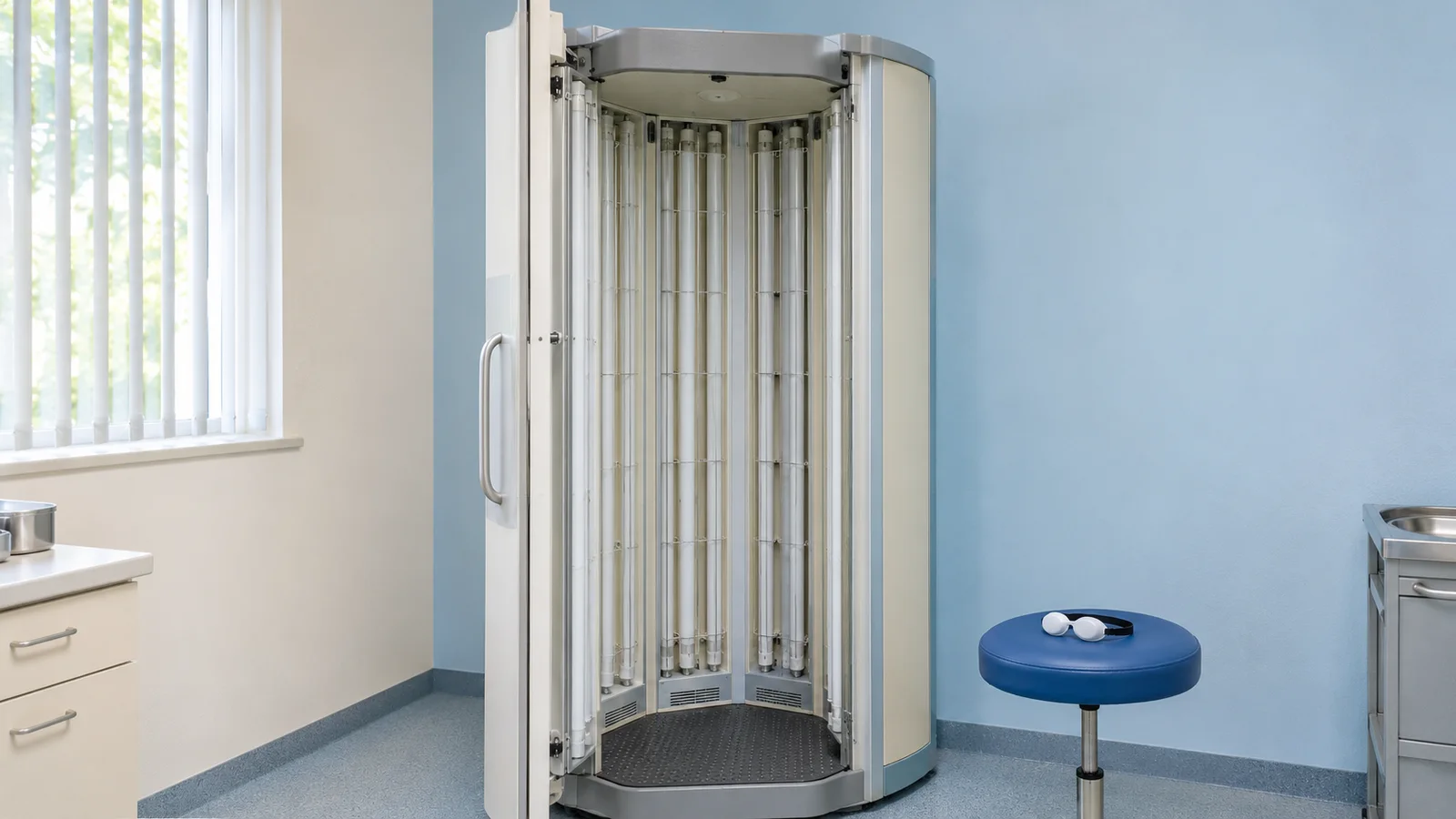
When psoriasis affects several areas of the body, applying creams to every patch can be difficult. A dermatologist may discuss narrowband UVB phototherapy if topical treatment alone has left symptoms poorly controlled. This treatment uses a calibrated source of ultraviolet B light in a planned series of sessions. The exposure itself is usually brief, but the visits can add up. Knowing what happens at each visit and how the staff responds to changes in your skin can help you decide what to ask before starting a course.
For a separate overview of the paid digital guide listed on this site, see what is included in The Psoriasis Strategy.
When a dermatologist may discuss narrowband UVB
Narrowband UVB uses a small range of ultraviolet B wavelengths to help reduce inflammation and slow the buildup of skin cells in psoriasis. The UK National Institute for Health and Care Excellence recommends offering it for plaque psoriasis or guttate-pattern psoriasis that topical treatments alone cannot control. Plaque psoriasis typically causes raised, scaly patches. Guttate psoriasis often causes many small spots. A dermatologist considers the pattern, how much skin is affected, and where it is before recommending a light treatment.
Location can change the discussion. Raised patches across the trunk or limbs may be accessible in a full-body booth. Hair or clothing can block light to some areas, and the clinician may suggest using a topical treatment for a covered or hard-to-reach site. Tell the team if the main problem is in the scalp, the skin folds, or a place that the clinic normally shields. That helps set realistic expectations about which areas are likely to benefit. It also helps explain why two people with a similar number of patches may leave with different treatment plans.
What happens before the first exposure
The team will ask about previous light treatments, reactions to sunlight, and a personal history of skin cancer. Bring an up-to-date list of prescription medicines, nonprescription products, and supplements. Some medicines can make skin more sensitive to UV light, and the clinic may need to review a new medicine even if you start it partway through the course. Existing medications still need to be managed with the clinician who prescribed them. Ask the phototherapy team whom to contact if the list changes between visits.
Some units check how readily a small area of skin reacts to UVB before setting the first treatment exposure. Others follow a protocol that uses factors such as your skin's usual response to sunlight. The staff will explain what to wear, what to cover, and how to use protective goggles. They may ask you to keep the same areas covered each time, so a previously shielded patch of skin does not suddenly receive an exposure intended for skin that has already been treated. Ask about lotions, sunscreen, and other products before the first visit because instructions can vary across protocols.
What a treatment visit can look like
For full-body treatment you usually stand inside a booth lined with lamps. Smaller units may be used for selected areas of skin. Staff set the exposure and explain where to stand, how to position yourself, and how to signal if you are uncomfortable. The time under the lights can be short, especially early in a course. The appointment may take longer because of check-in, changing, and a discussion about your previous session. Ask in advance about access if standing still, getting into the booth, or wearing goggles poses a practical difficulty.
Before a session, the clinician or nurse may ask how your skin felt after the last one. Report tenderness, warmth, itching, increased discomfort, or a color change, and say how long it lasted. In darker skin, a reaction can be easier to notice from heat, soreness, or a change in how the skin feels than from redness alone. The team uses that history to decide whether to repeat, adjust, or postpone an exposure. It is helpful to report what happened later in the day as well as how you felt immediately after leaving the clinic.
How to plan for a course of visits
Light therapy usually requires repeated sessions over several weeks. NICE describes two or three sessions a week for narrowband UVB in appropriate cases. Three sessions a week may produce a faster response, but the schedule also has to be workable. Before committing, check how visits fit around work, school, caring duties, or travel. A course may be difficult to complete if the building is far away or appointment times overlap with obligations you cannot move. Telling the team about those barriers early gives you a chance to discuss other arrangements or treatment options.
Ask whom to call if you miss a session or have to travel midway through the course. A gap and any additional sun exposure can affect how the clinician plans the next visit. Keep a record of dates and changes in symptoms if the clinic suggests it. Progress can show up as less itching, thinner plaques, reduced scaling, or easier sleep. Ask how the team will assess improvement and when they would reconsider the plan if the change is small.
What to report about skin reactions
Dryness, itching, or a sunburn-like reaction can occur. The clinic should explain what changes it expects and how to contact staff if your skin becomes painful, develops blisters, or stays irritated. Report a significant reaction before returning for another exposure. Mention recent sunburn, unplanned sun exposure, and any new medicines. Your treatment record helps the clinic check whether irritation followed higher exposure, an interval between sessions, or some other change that needs review.
UV exposure can contribute to premature skin aging, and doctors consider the potential long-term effects when planning another course. The evidence on skin cancer risk for narrowband UVB differs from the better-established risks of certain other ultraviolet treatments, such as PUVA. Prior treatment, personal risk factors, and past UV exposure matter. Ask whether the unit tracks your sessions across courses and whether you should tell another clinic about treatment you had elsewhere.
How prescribed home treatment differs from using a tanning bed
Some dermatology services offer prescribed home narrowband UVB with a medical unit, training, a protocol, and follow-up. A randomized U.S. study known as LITE found that supervised home treatment was at least as effective as office treatment in that study's setting. Persistent skin redness occurred more often with home treatment. If travel makes clinic attendance difficult, ask whether a supervised option is available and how the team would respond to a reaction or missed session. Coverage, equipment access, and ongoing support can differ among services.
Commercial tanning beds and sunlight do not provide the prescribed wavelength and measured exposure used by a phototherapy service. A home unit also requires the protections and instructions supplied by the treatment team. The American Academy of Dermatology advises against using tanning beds to treat psoriasis. If you already use a light device or have had prior UV treatment, bring the details to the consultation so the team can take that history into account.
Questions to take to the appointment
Ask which areas the clinician expects the light to reach, how the staff will know the course is helping, and what the next step would be if it does not help enough. Check what to do if you have a reaction after the clinic closes and which products are appropriate before a visit. If your skin improves and then flares again, a follow-up can address whether to reconsider the combination of treatments. NICE generally advises against routinely continuing phototherapy simply to maintain a response after a course.
Before the last session, ask what the plan is for skin that improved and for areas that still bother you. The dermatologist may assess those areas separately and discuss what to do with previously prescribed creams. It can also help to ask how to share photos securely if plaques return between visits. Photos taken under similar lighting can show how an area has changed, and a note about itching or sleep gives the team information a photograph cannot capture.
Bring a short list of the changes you would most like to see, such as sleeping with less itching or being able to wear clothing that currently rubs against plaques. A specific goal gives you and the team something to check at follow-up. For details on the separate educational guide sold on this site, see the product page for The Psoriasis Strategy.
Sources and further reading
- NICE, Psoriasis: Assessment and Management
- American Academy of Dermatology, Psoriasis Treatment: Phototherapy
- British Association of Dermatologists, Narrowband UVB Phototherapy Patient Leaflet
- British Photobiology Group, Phototherapy for Skin Disease
- Gelfand and colleagues, The LITE Randomized Clinical Trial
RECOMMENDED READING
A practical guide for readers interested in psoriasisA guide to psoriasis
The Psoriasis Strategy
A digital guide by Julissa Clay. Review the strategy overview and contents before deciding whether it is relevant to you.
- Topic: psoriasis
- Author: Julissa Clay
- Format: digital guide
 Secure checkout through ClickBank
This page contains affiliate links. We may earn a commission if you purchase through them, at no extra cost to you.