Psyllium vs. Wheat Bran for IBS: What the Evidence Says
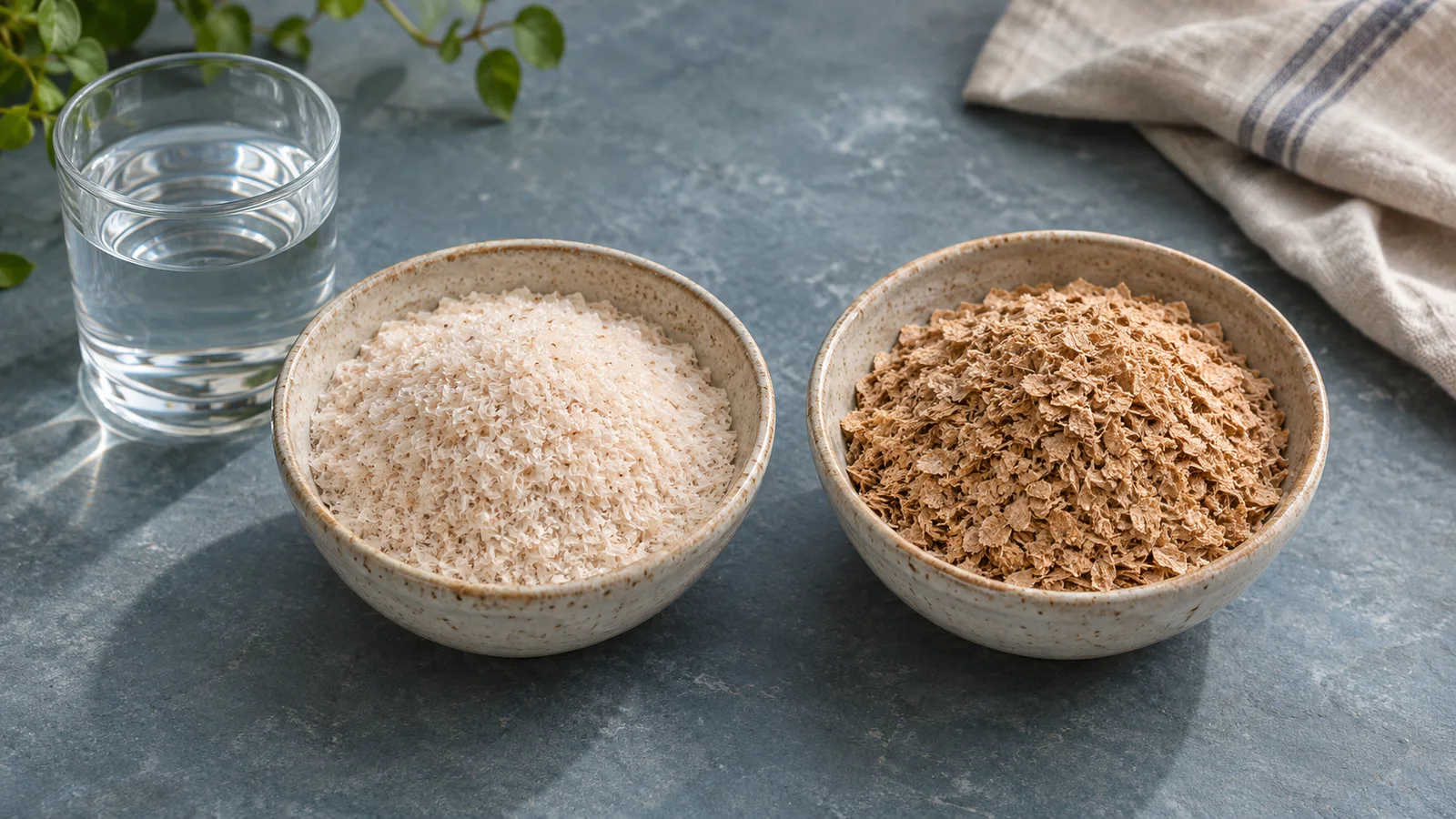
“Eat more fiber” sounds straightforward until a bowl of bran cereal leaves you more bloated than before. Fiber is a group of substances, and different types behave differently in the gut. For people with irritable bowel syndrome (IBS), soluble fiber such as psyllium has better evidence for improving overall symptoms than wheat bran. Understanding what each product contains can help you ask a more useful question at your next visit: which kind of fiber makes sense for the symptoms I have?
Julissa Clay’s site has a product overview for The IBS Program for readers browsing the collection. The comparison below draws on clinical studies and guidelines and focuses on the differences between psyllium and wheat bran.
Why fiber type matters in IBS
IBS can involve abdominal pain along with constipation, loose stools, or a pattern that shifts between them. Two people can both have IBS and find that different symptoms limit their day. Someone who spends a long time straining may care most about how easily stool passes. Someone whose plans revolve around bathroom access may be more concerned about urgency. For either person, less pain and bloating can matter just as much as a change in bowel frequency.
Psyllium, also called ispaghula, comes from a seed husk. It contains soluble fiber that absorbs water and forms a gel. That property helps explain why it can soften hard stools and make them easier to pass. Wheat bran is the outer layer of the wheat grain and is rich in insoluble fiber. It adds bulk too, but it behaves differently in the gut. Wheat bran, especially when added as a concentrated supplement, can worsen symptoms in some people with IBS.
These are comparisons between specific fiber sources. An oat product, a bean dish, and a serving of fruit all contribute fiber in different proportions. Products labeled “fiber supplement” can contain ingredients other than psyllium. The name on the front of the package gives you a category. The ingredient list tells you which fiber you would actually be taking.
What the research says about psyllium and bran
The British Society of Gastroenterology recommends soluble fiber such as ispaghula for overall IBS symptoms and abdominal pain. Its guidance distinguishes soluble fiber from wheat bran because bran may make symptoms worse. It also recommends increasing soluble fiber gradually if it is used, since a rapid increase can cause bloating. The National Institute of Diabetes and Digestive and Kidney Diseases similarly notes that soluble fiber appears to be more helpful for IBS symptoms.
One randomized trial published in the BMJ compared psyllium, bran, and placebo in 275 adults with IBS seen in primary care. More people in the psyllium group reported adequate relief than those in the placebo group during the first two months. The study also reported that people assigned to bran dropped out more often, with worsening symptoms a major reason. This was a study of average responses across groups. Your clinician can help interpret how closely the study fits your bowel pattern, medical history, and current treatment.
Some people tolerate wheat bran well in a food they enjoy. The guideline comparison is especially relevant when you are considering adding bran specifically to manage IBS. Feeling worse after a bran supplement, on its own, does not identify which component of a food caused the reaction. Bring a record of what you ate and what happened if similar symptoms occur with several foods.
One way to use the evidence is to ask what a study counted as relief. In the BMJ trial, participants were asked how much relief they had from IBS-related abdominal pain or discomfort. That kind of outcome captures something different from counting bowel movements. It also means that evidence of relief from psyllium does not establish that a different supplement, or more fiber of any kind, will have the same effect.
How to compare packages and meals
Check the active ingredient and serving information on a supplement. A flavored powder can contain psyllium along with sweeteners or other ingredients. A mixed-fiber product can provide a different kind of fiber entirely. If a pharmacist or dietitian suggests a particular ingredient, a photo of your product label is often more useful than a brand name, especially when a brand sells several formulations.
For foods, compare your actual portion with the serving size on the label. A cereal may advertise fiber per serving, but a full bowl can contain more than one serving. If you are discussing bloating with a dietitian, a description of the bowl you actually eat gives them more information than the number printed on the box.
Also distinguish the weight of the whole serving from the amount of fiber it contains. A packet might list the weight of all the powder near the top of the label and list dietary fiber separately. A kitchen spoon and a product scoop may measure different volumes. Ask how to read the directions for the actual product you have before using a number from another package or from a study.
Food changes can be considered on their own. If you are thinking about replacing a bran-heavy breakfast, the NIDDK lists oats among the food sources of soluble fiber. The whole meal still matters. Milk, fruit, sweetener, and serving size may all change when you switch cereals. Keeping the other parts familiar, where practical, can help you tell which change you tolerated. You can start the discussion with a couple of meals you eat regularly and ask which options fit your preferences and symptoms.
Check product directions and medication timing
Psyllium takes up water and swells, so the liquid instructions matter. MedlinePlus advises following the directions on the package or prescription label and taking powder or granules with the required amount of liquid. Ask a clinician or pharmacist before trying it if you have trouble swallowing, a history of bowel blockage, or instructions to limit fluids. People with different medical histories may need different guidance even when they have similar IBS symptoms.
Psyllium can affect the timing of some medicines. A pharmacist can look at your list of prescriptions, over-the-counter products, and supplements and tell you whether any doses need to be separated. Take the exact names and strengths with you. Seek immediate medical help for breathing or swallowing difficulty after taking a product. If pain or other bowel symptoms worsen, contact your clinician to discuss what happened and whether another cause needs to be considered.
Decide what would count as improvement
If your care team agrees that a fiber trial is reasonable, ask which symptom to track and when to check in. If hard stool and straining are your main concerns, recording the number of bowel movements alone can miss a meaningful improvement. You can also note whether stools were hard, formed, or loose and whether you needed to strain or rush. If pain is your priority, note when it occurred and whether it interrupted activities you normally do.
A simple log can take less than a minute per day. Alongside symptoms, record the specific fiber source, the date you added it, and any changes in the amount or formulation. Note important changes such as a stomach illness, a new medicine, or a day when meals were very different. That context can help your clinician interpret why two weeks with similar fiber intake felt different. It may also help them see whether continued tracking would add anything useful.
Rectal bleeding, unexplained weight loss, and a persistent change in bowel habits warrant medical assessment. Tell the clinician about these symptoms even if you already have an IBS diagnosis. If discomfort is your usual symptom, it is still worth describing anything that feels substantially different, including when the change began and whether it followed a new product.
What to take to your next appointment
Bring a photo of the package, a short description of your usual meals, and the symptom you would most like to improve. Useful questions include “Does a soluble fiber trial fit my bowel pattern?”, “Could this product affect the timing of my medicines?”, and “What would tell us to stop or change course?” These details help your care team distinguish a reasonable food adjustment from something that calls for assessment or another approach.
Readers who want to see the companion title can review the book details and format for The IBS Program. For a conversation about fiber, the two details most worth bringing are the source on the ingredient list and what you noticed after eating or taking it.
Sources and further reading
- British Society of Gastroenterology, Guidelines on the Management of Irritable Bowel Syndrome
- National Institute of Diabetes and Digestive and Kidney Diseases, Eating, Diet, and Nutrition for IBS
- Bijkerk et al., Randomized Trial of Soluble and Insoluble Fiber in IBS, BMJ
- MedlinePlus, Psyllium Drug Information
- National Institute of Diabetes and Digestive and Kidney Diseases, Diagnosis of IBS
RECOMMENDED READING
A practical guide for readers interested in irritable bowel syndromeA guide to irritable bowel syndrome

The IBS Program
A digital guide by Julissa Clay. Review the program overview and contents before deciding whether it is relevant to you.
- Topic: irritable bowel syndrome
- Author: Julissa Clay
- Format: digital guide
 Secure checkout through ClickBank
This page contains affiliate links. We may earn a commission if you purchase through them, at no extra cost to you.