Wet Wraps for Eczema: What to Ask Your Care Team
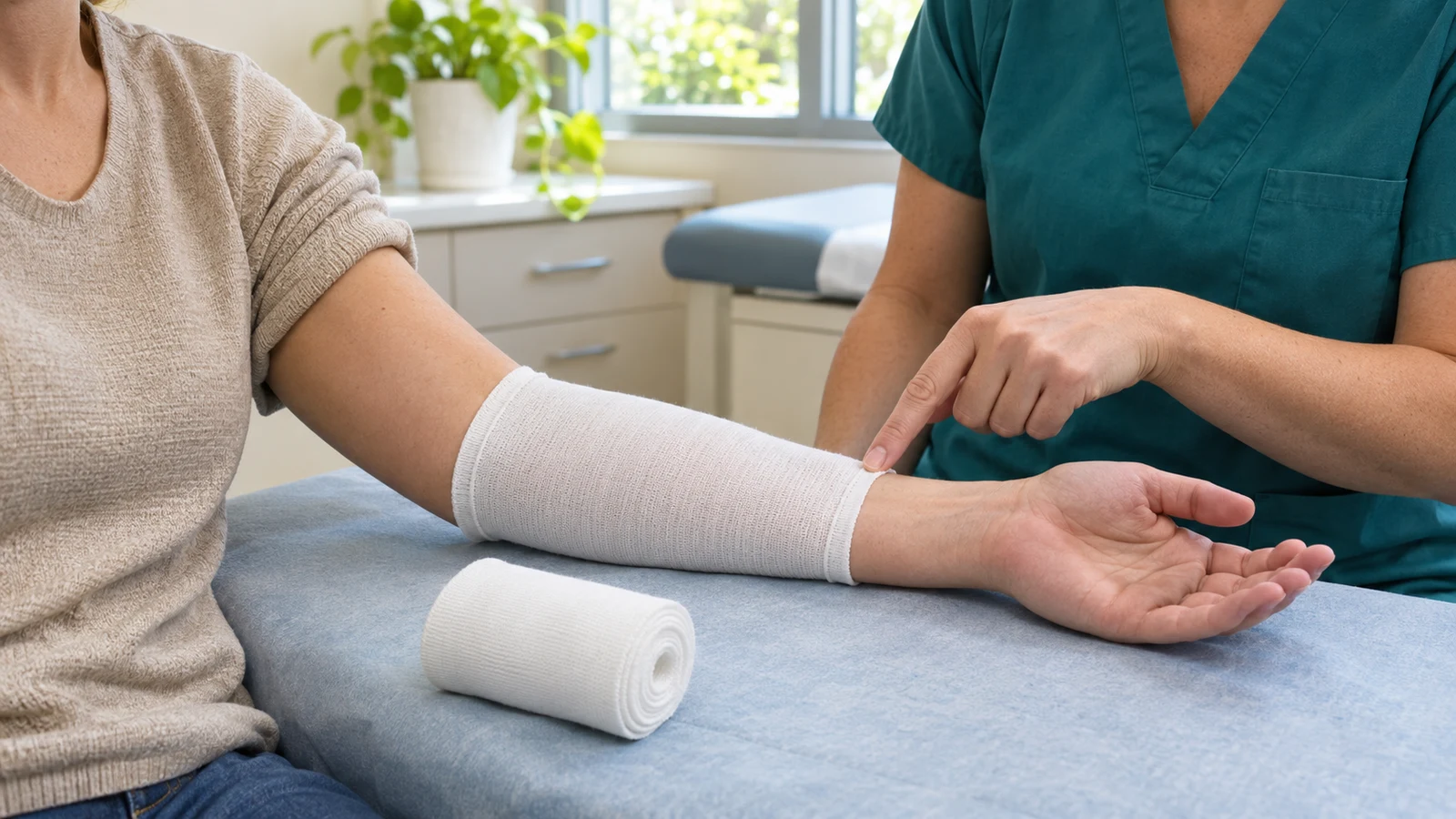
If an eczema flare is keeping you awake or making it hard to stop scratching, your care team may discuss wet-wrap therapy. It uses a damp dressing against the treated skin and a dry layer on top. For some people with atopic eczema, the dressing can soothe itching and protect the skin from scratching while the flare settles.
Ask for a demonstration and a written plan
Tell your clinician which areas are flaring, how the itch affects your sleep, and which products you already use. Bring the names or photos of your moisturizers and prescription creams. If the clinician recommends wet wraps, ask them to show you which dressing to use, where it goes, how long to leave it in place, and when to stop using it. Ask for the plan in writing so you can refer to it at home.
Check what goes under the wrap
Covering the skin can increase the amount of a topical steroid that the skin absorbs. If a steroid is part of your eczema plan, ask which product can go under the dressing and which areas to leave uncovered. Use a topical steroid under a wrap only as directed by your healthcare professional. Instructions for one area of skin may differ from instructions for another.
Ask what to do if the skin gets worse
Wet wraps should be used with professional guidance and should be avoided on infected skin. Ask your care team what changes should prompt a call. If you think the skin may be infected or it gets worse during a course of wrapping, contact the team for advice before applying another dressing.